Availability, options and software features to be specified in your quotation.
GES 400 · EXISTING INSTALLATIONS AND UPGRADES
Already working with an EGI system?
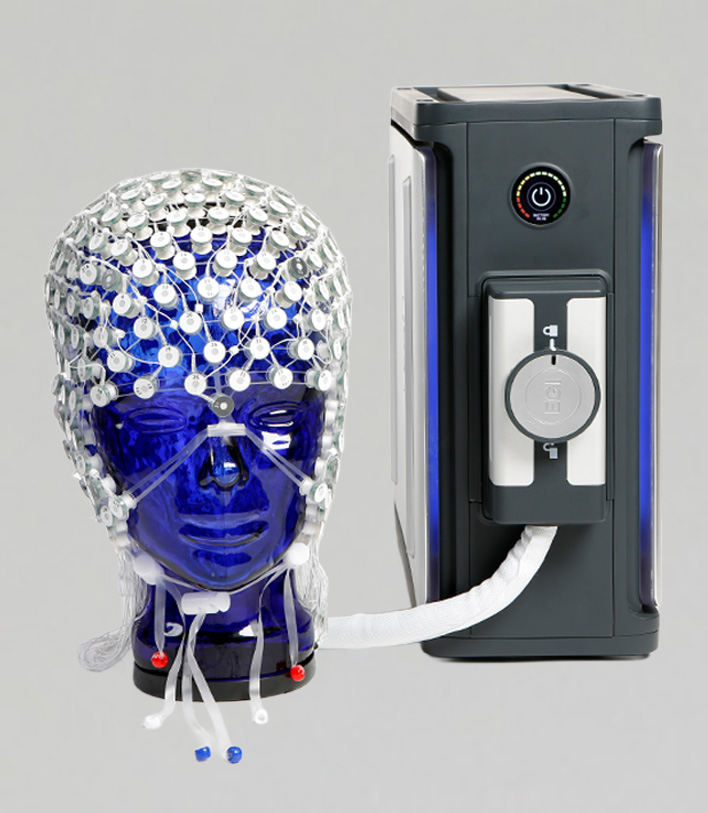
The GES 400 combines amplifier, computer, software and nets. Dedicated configurations support TMS or 3 T MRI. We review your existing equipment to identify upgrade options.
Geodesic Sensor Nets cover head circumferences from 28 to 64 cm. This range supports research into early development, language, cognition, learning, and perception, from premature infants to adults.
28–64 cmhead circumference across the listed sizes32 · 64 · 128channels for sizes from 28 to 51 cmUp to 256channels, depending on size and configuration
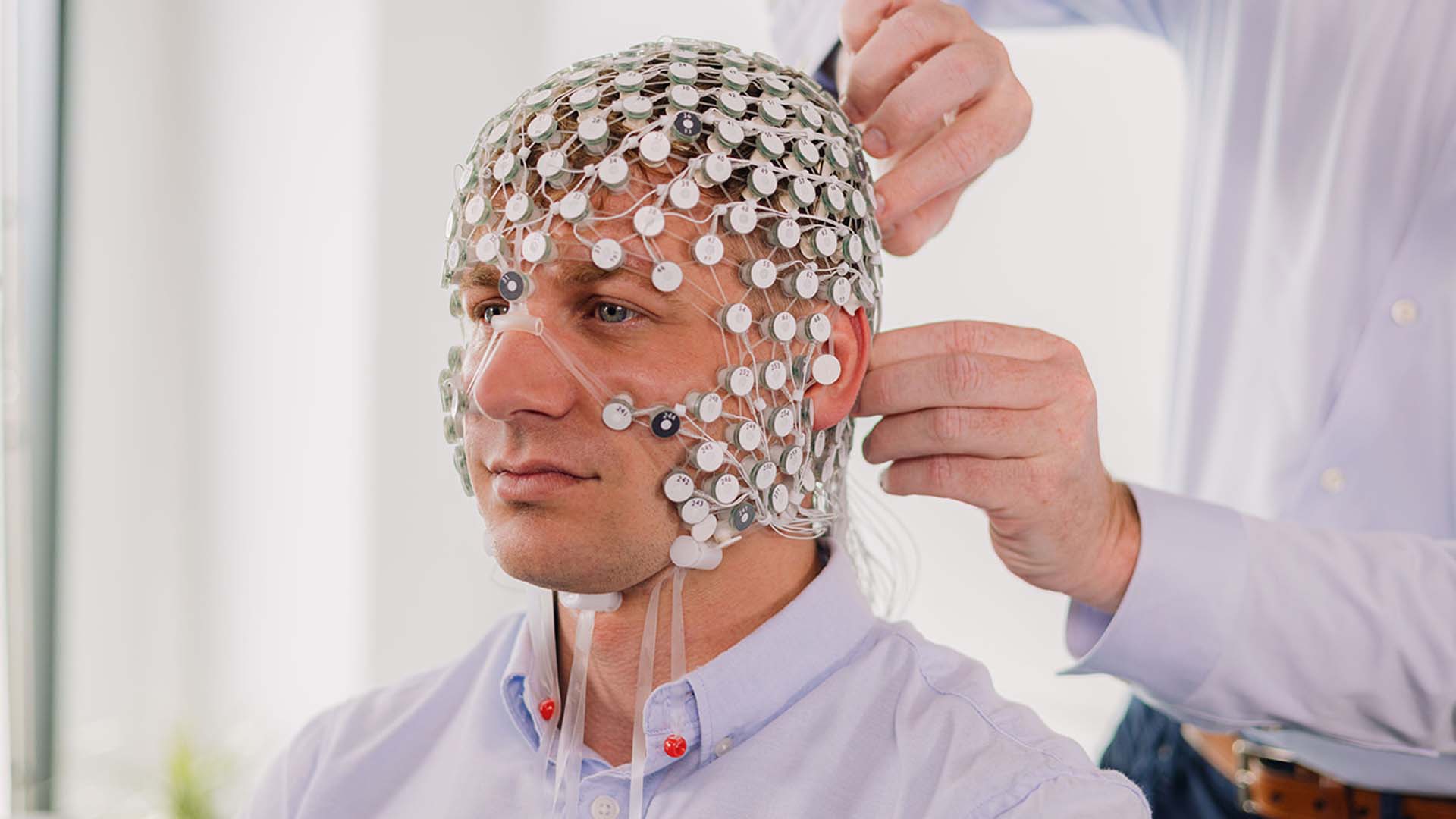
One-step placement, designed for comfort.
The flexible net positions all sensors together. Magstim EGI brochures highlight quick application and participant comfort. For routine EEG, the clinical flyer cites about 15 minutes after training. Saline nets require no scalp abrasion or glue.
These features can make BabyLab sessions easier to organize. Validate the setup, size, and workflow for each age group, recording duration, and study protocol.
Early developmentLanguage & cognitionPerceptionParent–child studies
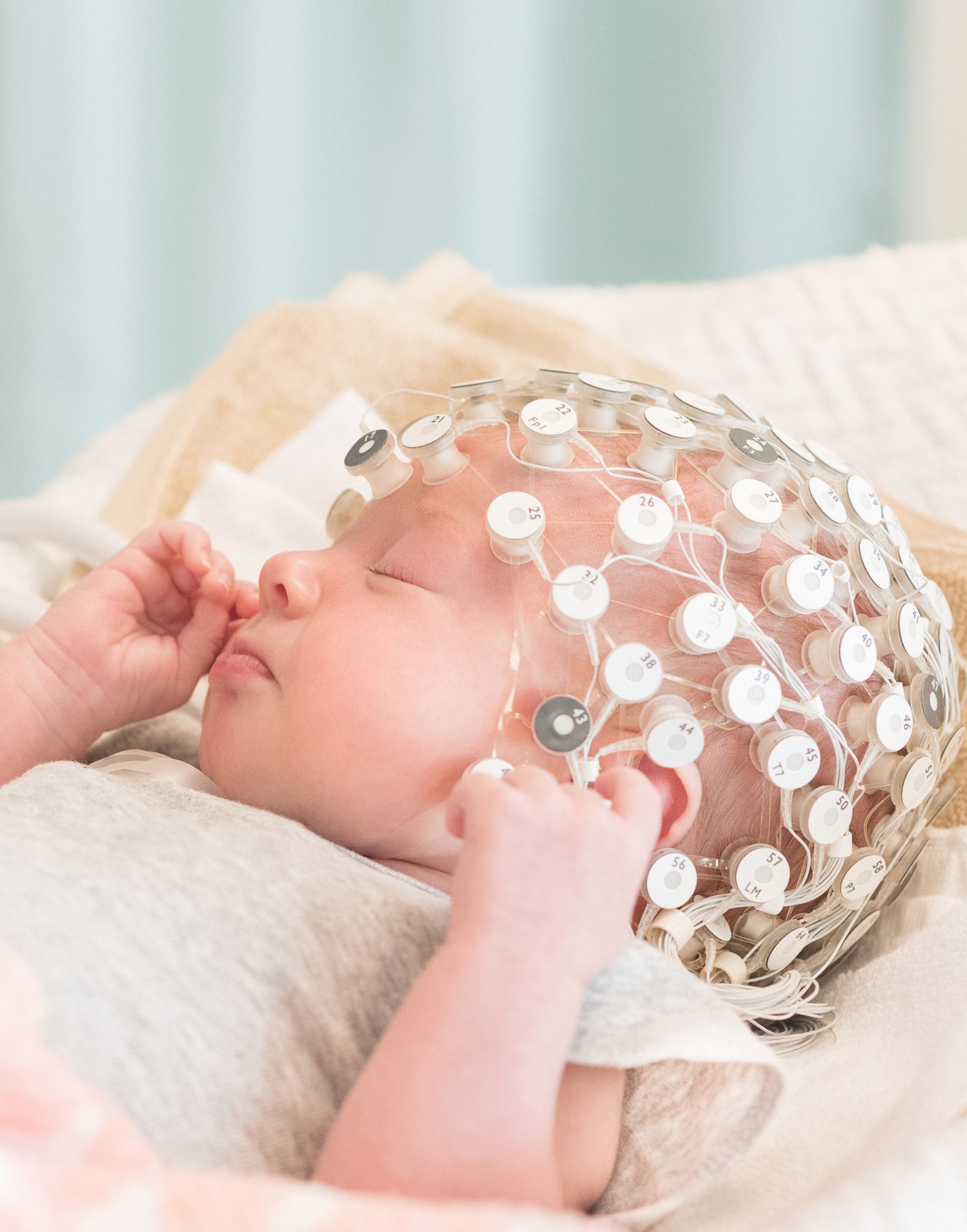
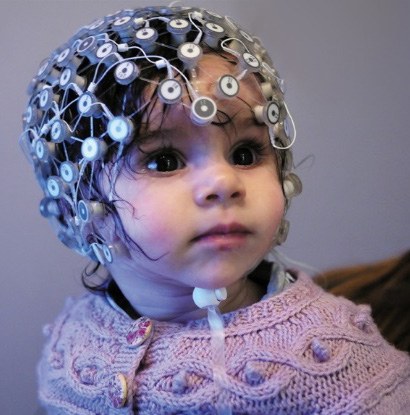
Infant wearing an EEG net · photo by Magstim EGIPediatric research · photo by Magstim EGI
Specific size references
The age ranges below are manufacturer estimates; they vary with sex and growth. Measure head circumference to choose a size, and confirm compatibility with the intended system and configuration.
Head circumference
Age or size reference
Channels listed
28–30 cm
Preterm infant · small
32, 64, 128
30–32 cm
Preterm infant · medium
32, 64, 128
32–34 cm
Preterm infant · large
32, 64, 128
34–36 cm
Newborn
32, 64, 128
36–37 cm
Birth–2 weeks / birth–1 month
32, 64, 128
37–38 cm
2 weeks–1 month / 1–2 months
32, 64, 128
38–40 cm
1–2 months / 2–3 months
32, 64, 128
40–42 cm
2–3 months / 3–6 months
32, 64, 128
42–43 cm
3–5 months / 6–7 months
32, 64, 128
43–44 cm
5–7 months / 7–9 months
32, 64, 128
44–47 cm
7–15 months / 9–21 months
32, 64, 128
47–51 cm
Pediatric · small
32, 64, 128
51–54 cm
Pediatric · large
32, 64, 128, 256
54–56 cm
Adult · small
32, 64, 128, 256
56–58 cm
Adult · medium
32, 64, 128, 256
58–61 cm
Adult · large
32, 64, 128, 256
61–64 cm
Adult · extra-large
32, 64, 128, 256
References from the supplied Magstim EGI Geodesic Sensor Net / GES 400 brochures (2018 and 2019). Available options depend on the system, net, and configuration and should be confirmed for each project.
From net selection to EEG–TMS integration, explore a few examples of Magstim EGI systems in use.
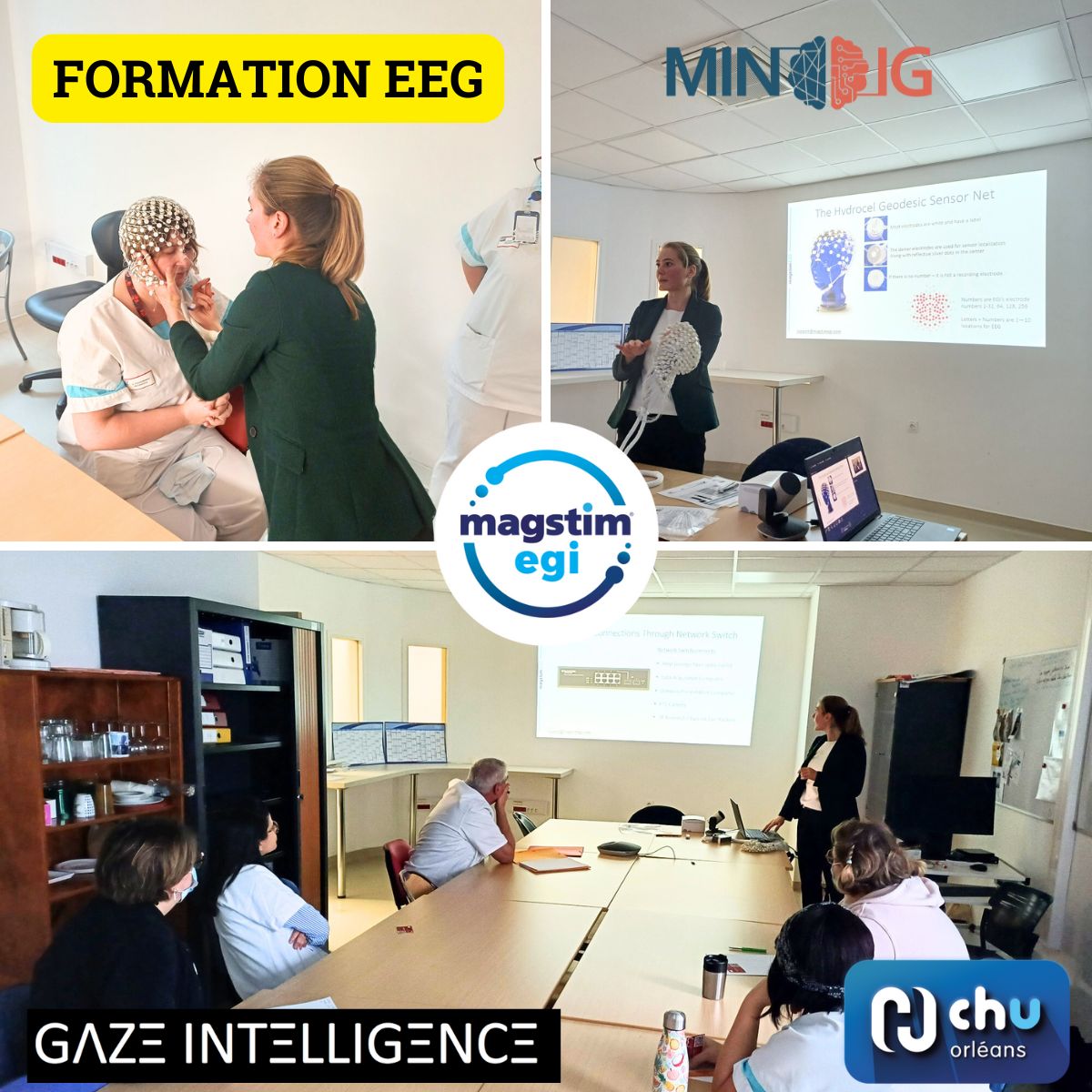
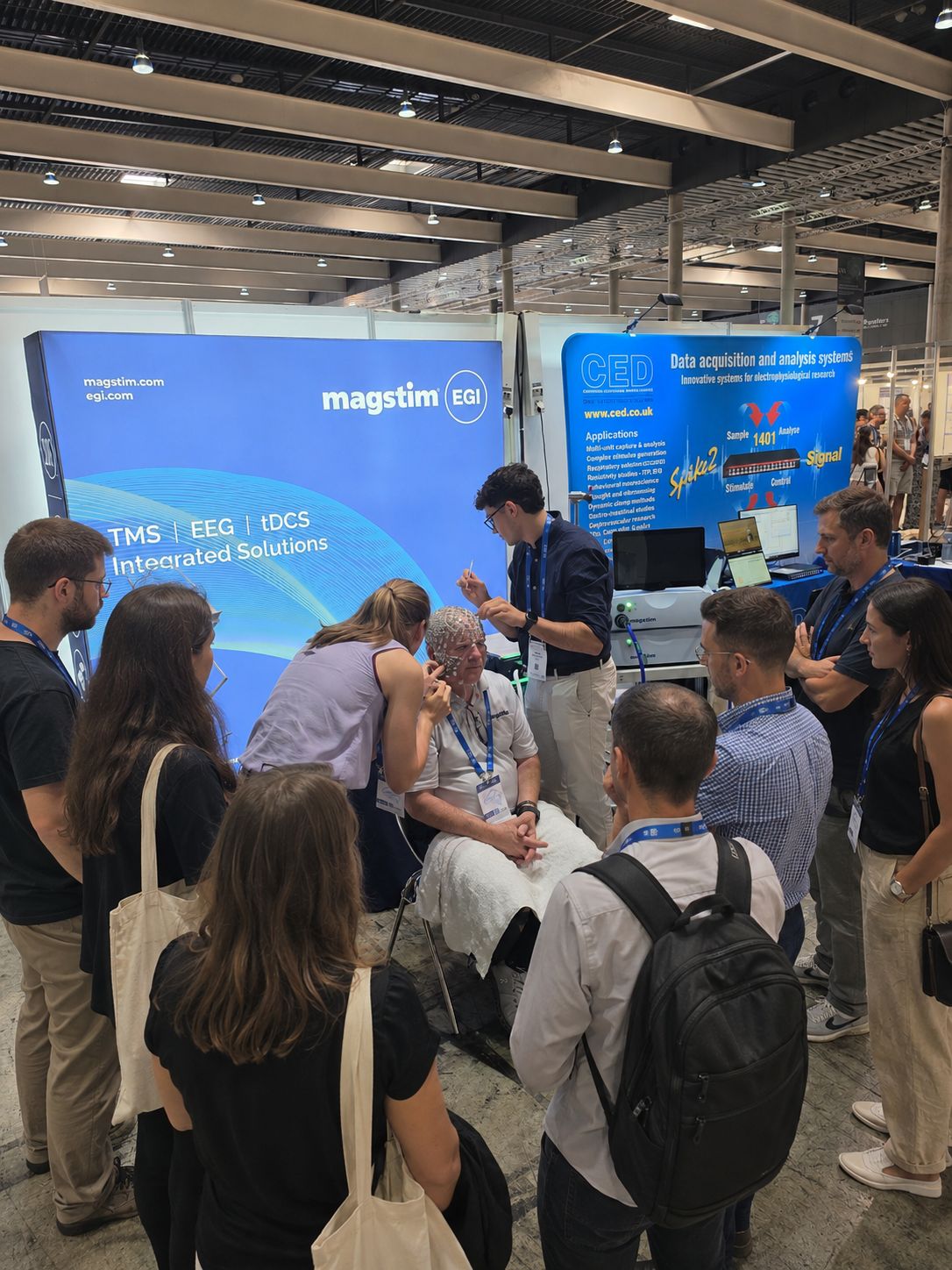
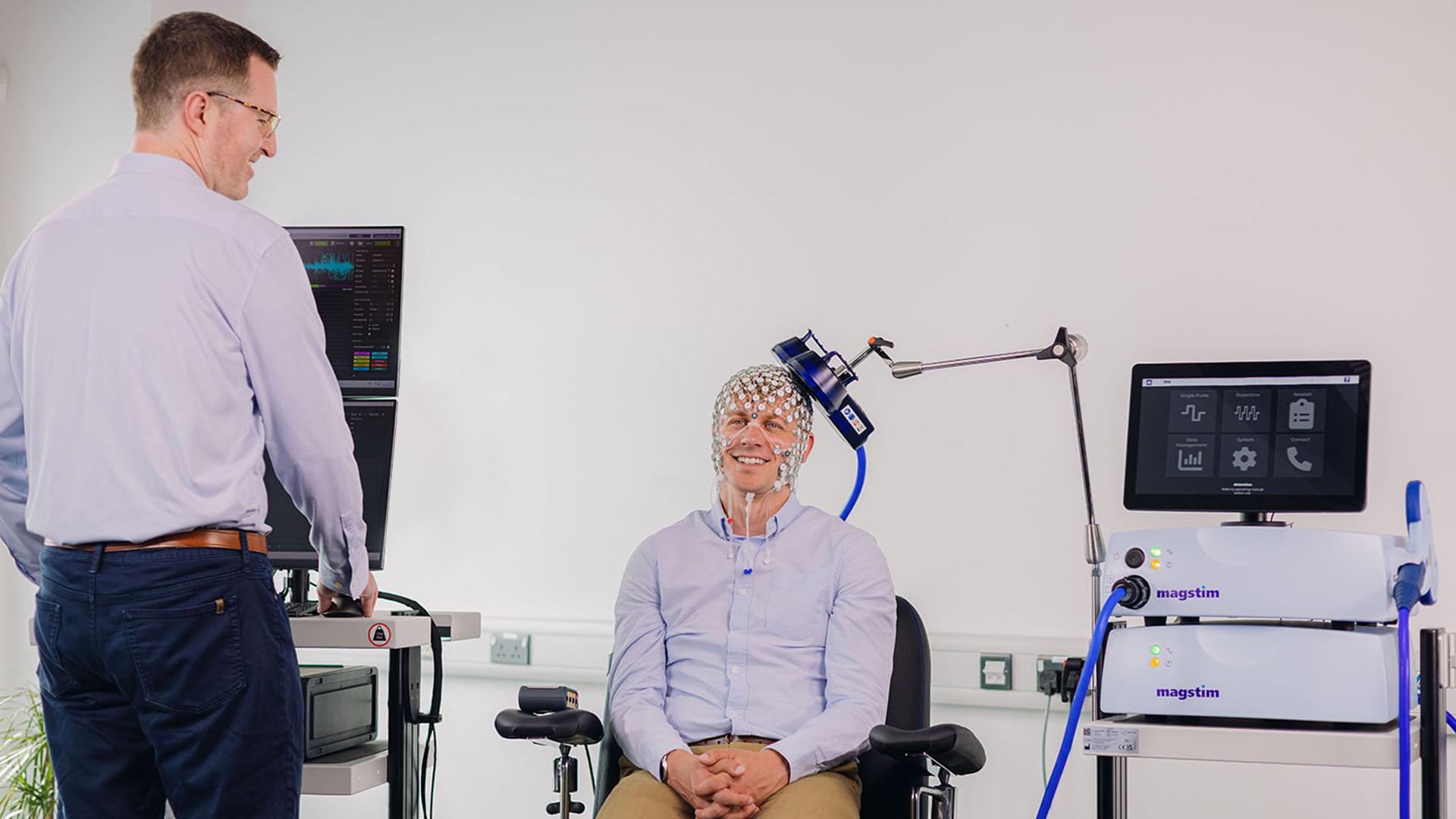
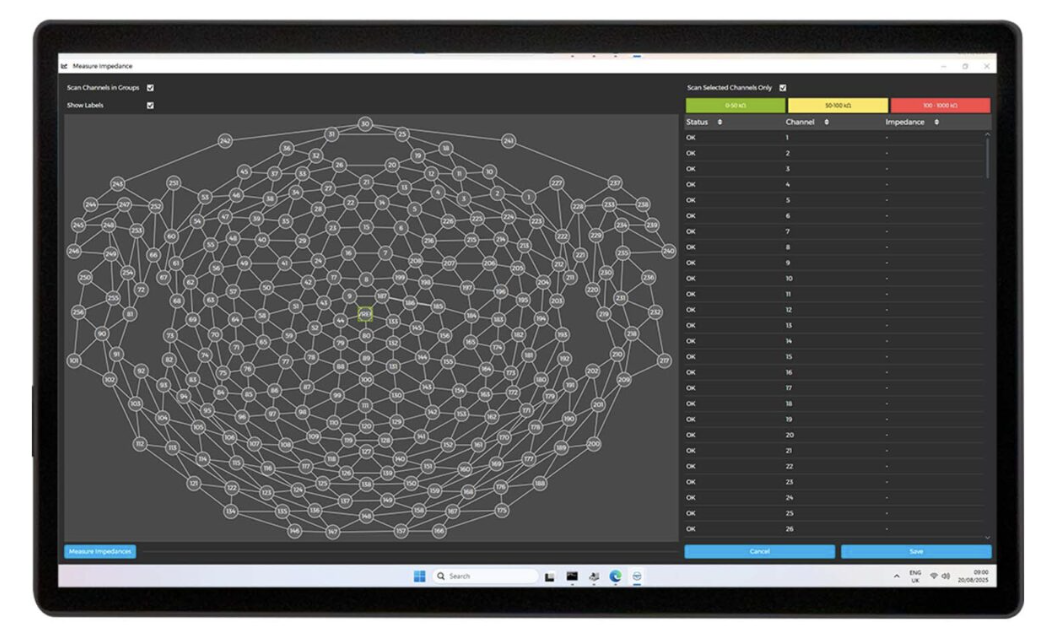
EEG net placement and preparationGES 500 · acquisition stationTraining and supportHigh-density EEG demonstrationEEG + TMS integrationPhysio option · physiological measurementsNetStation · impedance checkE‑Prime Extension · Net Station synchronisation
03 / ACQUISITION AND ANALYSIS
Data to integrate into your environment.
Net Station supports EEG acquisition, review and processing. The version must match your system: Net Station 6 accompanies GES 500; Net Station 5.5 belongs to the GES 400 range.
MFF data can be used with third-party tools such as EEGLAB and FieldTrip. We check formats and data exchange requirements for your analysis pipeline.
Prepare transfers and synchronisation with your environment.
STIMULUS PRESENTATION & SYNCHRONISATION
PsychoPy and E-Prime, connected to your EEG.
Keep your stimulus presentation tools and link protocol events to EEG data: stimuli, responses and experimental conditions.
PYTHON & PSYCHOPY
Your Python experiments, synchronised.
The egi-pynetstation library connects a PsychoPy experiment to Net Station, controls recording start and stop, and sends timestamped event markers through the ECI interface.
Visual markers can be tied to the screen refresh; clock-offset and drift correction help maintain their alignment with the EEG.
egi-pynetstation is an independent community open-source project. We help you select the interface and validate your setup.
Gaze Intelligence supplies the E-Prime Extensions for Net Station (EENS) add-on to integrate E-Prime with EEG acquisition: recording start and stop, stimulus and response markers, and trial information.
The extension synchronises clocks through NTP/SNTP and sends events over Ethernet using ECI for precise temporal alignment with EEG signals. Its tools integrate directly into E-Studio.
Clock synchronisation is complemented by checks of actual stimulus presentation. Photocell or EGI AV Tester tests measure the offset and its variability before data collection. We tailor integration to your PsychoPy, E-Prime and Net Station versions and your amplifier.
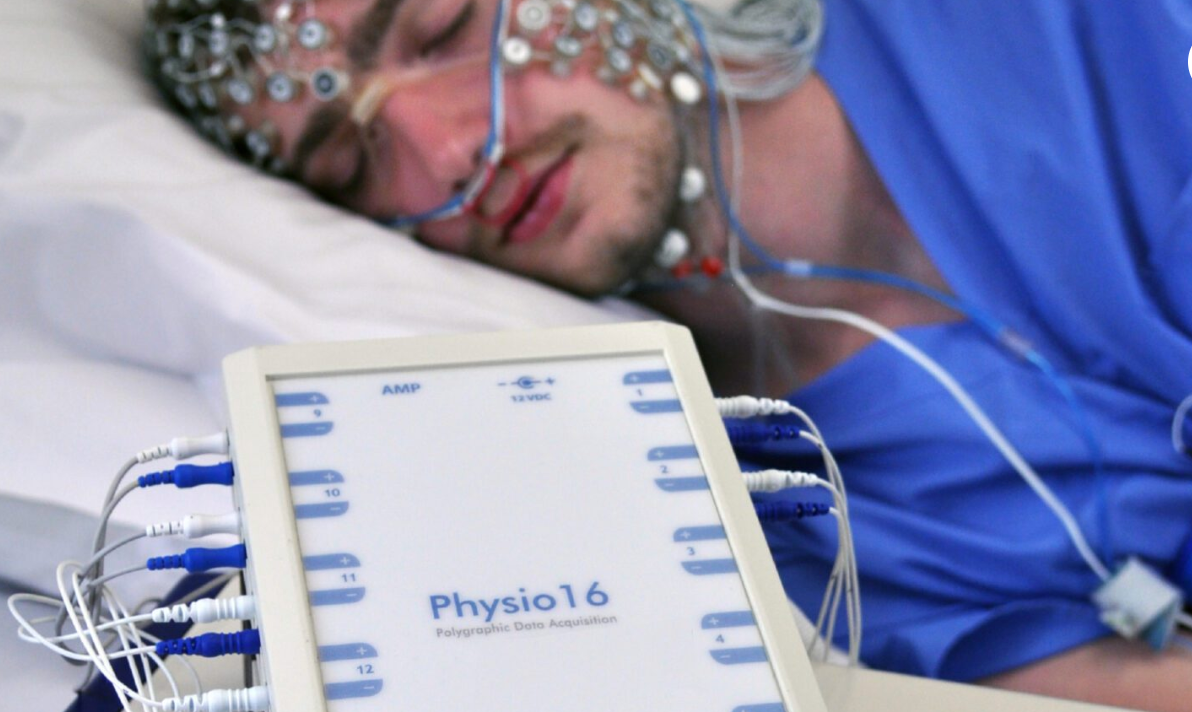
Physio16 is an input box for physiological signals that complement EEG. It records these measurements in synchrony with EEG and displays them together in Net Station.
ECG · heartEMG · musclesRespirationSpO₂ · oxygen saturationBody position
GES 400 · PHYSIO16
16 channels + SpO₂
Each Physio16 provides up to 16 bipolar channels and one SpO₂ channel. Two input boxes can connect to Net Amps 400 for 32 physiological channels and two SpO₂ channels alongside EEG.
GES 500 · PHYSIO MODULE
8 to 16 channels + SpO₂
The GES 500 offers a new-generation Physio module with 8 to 16 physiological channels plus SpO₂, depending on configuration. This extension combines EEG and physiology, including for sleep research.
We select the module, sensors and connections for your GES 400 or GES 500. Reusing an existing Physio16 with a GES 500 requires a specific compatibility check.
This study examines how electrode density and coverage affect source localization. Under the conditions studied, greater density improves accuracy; results also depend on scalp coverage and the method used.