EyeLogic LogicOne: the 250 Hz screen-based eye tracker
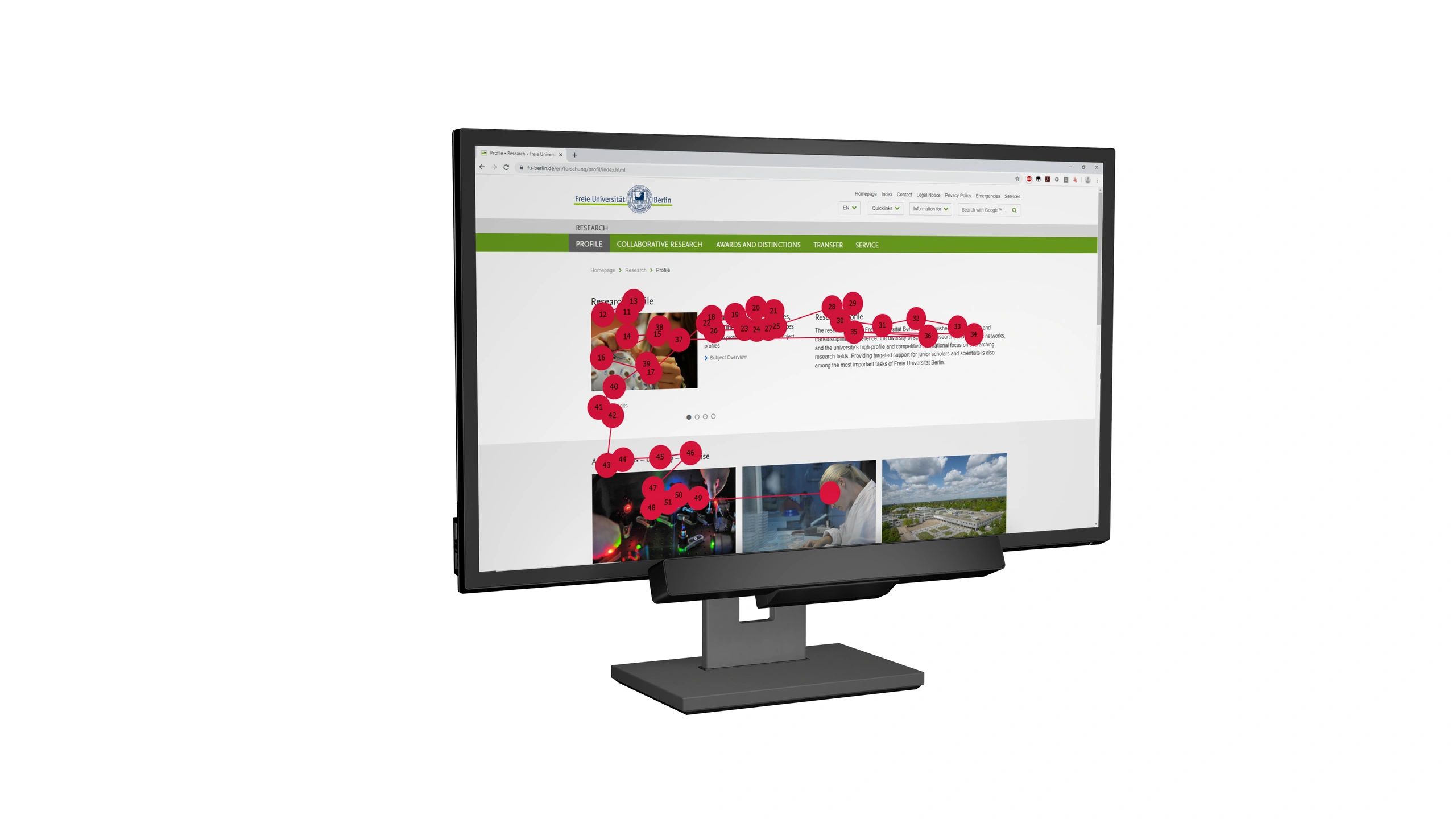
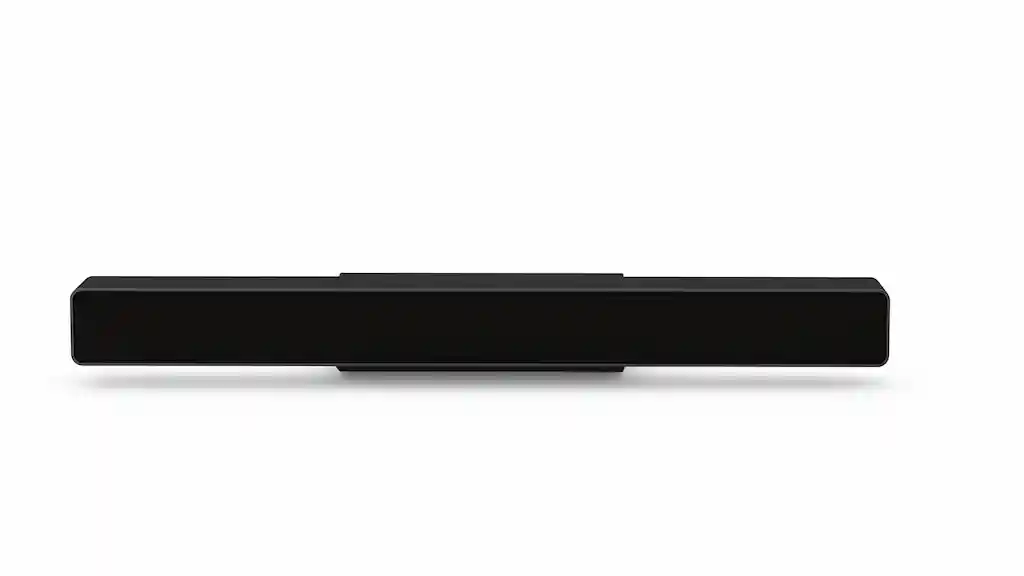
A slim bar under your screen, one USB 3 cable, and gaze is measured 250 times per second. The LogicOne is EyeLogic's eye tracker for studies focused on saccades and for gaze-contingent protocols. It is designed in Germany and works with your own computer and screen.
At a glance
| LogicOne | |
|---|---|
| Sampling rate | 250 Hz, one sample every 4 ms |
| System latency | 8 ms |
| Accuracy and precision | Under 0.5° and under 0.1° (typical values) |
| Measurement | Binocular, with the radius of each pupil |
| Installation | Under the screen, over USB 3, on your computer |
| Screens | 10 to 25 inches; large screens and projectors possible |
| Software | PsychoPy, E-Prime 3, OpenSesame, Presentation, LSL, development kit, optional SMI software |
| Warranty | 2 years, perpetual licence with updates |
For which studies?
- Saccades and gaze dynamics: at 250 Hz, a saccade is described by several samples, where a 60 Hz device gives only one or two.
- Gaze-contingent protocols: the 8 ms latency and tracking recovery within 8 ms after a loss make it possible to change the image according to gaze.
- Reading, visual attention, experimental psychology: screen-based studies in the laboratory.
- Studies combined with EEG: synchronisation is done through Lab Streaming Layer or through the experiment software.
Sampling rate does not tell the whole story: it describes the time step, not spatial fineness. For that, look at accuracy and precision, and check them with your population.
Measurement specifications
| Value | |
|---|---|
| Technique | Corneal reflection and dark pupil, video-based, contact-free |
| Sampling rate | 250 Hz |
| System latency | 8 ms at 250 Hz |
| Blink recovery | 4 ms at 250 Hz |
| Gaze recovery | 8 ms at 250 Hz |
| Accuracy | Under 0.5° (typical value) |
| Precision | Under 0.1° (typical value) |
| Data provided | Timestamp, position of each eye, left, right and combined gaze point, radius of each pupil |
| Eye image stream | About 20 Hz |
Installation
| Value | |
|---|---|
| Computer and screen | Your own: no computer is supplied |
| Connection | USB 3, recognised when plugged in |
| Working distance | 50 to 85 cm |
| Tracking area | 30 cm wide by 20 cm high, at 60 cm |
| Screen size | 10 to 25 inches, with any format, resolution and scaling |
| Large screens and projectors | Possible, with a custom geometry |
| System requirements | Intel Core i7 or comparable AMD processor, 16 GB of memory, Windows 11, one USB 3 port |
Software and integrations
| What is compatible | |
|---|---|
| EyeLogic development kit | Interface and examples in C++, C, C#, Python (including PyGaze) and Matlab. Supplied with the device. |
| Experiment software | NBS Presentation, E-Prime 3, OpenSesame, PsychoPy |
| Synchronisation | Lab Streaming Layer (LSL) |
| InsightLab | EyeLogic's study and analysis software |
| SMI software | Optional: SMI Experiment Suite 360° and iView X SDK. The option requires a valid SMI dongle or the iView X SDK. |
Two set-ups are possible: a single computer, or two computers that separate stimulus presentation from recording.
Already using SMI software?
The SMI option lets you control the LogicOne from SMI Experiment Suite 360° or through the iView X SDK. A team that owns an older SMI system can therefore change device while keeping its software and habits. We check the version of your software and dongle with you before any order.
Warranty, licence and support
- 2-year warranty: repair or replacement of faulty hardware.
- Perpetual licence, with software updates included.
- Development kit and integrations with third-party software included.
- Technical support included for installing the hardware and software purchased.
LogicOne or Lite?
| LogicOne | Lite | |
|---|---|---|
| Sampling rate | 250 Hz | 120 Hz or 60 Hz |
| System latency | 8 ms | 16 ms at 120 Hz |
| Accuracy and precision | Identical: under 0.5° and 0.1° | Identical |
| Installation, screens, software | Identical | Identical |
| SMI software option | Yes | Yes for the Lite 120, no for the Lite 60 |
| Choose it for | Saccades, gaze-contingent protocols | Fixations, scan paths, field studies |
A team that comes from SMI, more than 15 years of eye tracking
Our team worked at SMI (SensoMotoric Instruments), the research eye tracker manufacturer acquired by Apple in 2017. We have been practising eye tracking for more than 15 years: choice of equipment, set-up, calibration, protocol, analysis.
- Advice before you buy: we start from your protocol, your population and your stimuli, not from the data sheet.
- Continuity for SMI teams: we support existing SMI systems (BeGaze, Experiment Center, iView X, RED, ETG) and help renew a fleet without losing working habits.
- A supported start: installation, initial training and first recordings with your team.
Frequently asked questions
What is the LogicOne's sampling rate?
250 Hz, one sample every 4 milliseconds. The system latency stated by EyeLogic is 8 ms at that rate.
How accurate is the LogicOne?
EyeLogic states an accuracy under 0.5° and a precision under 0.1°, as typical values. These figures depend on the participant and the conditions: we recommend checking them with your population during a demonstration.
Which software does the LogicOne work with?
NBS Presentation, E-Prime 3, OpenSesame, PsychoPy and Lab Streaming Layer, plus a development kit in C++, C, C#, Python and Matlab. An option makes it compatible with SMI Experiment Suite 360° and the iView X SDK.
Do I need a special computer?
The computer is not supplied. EyeLogic requires an Intel Core i7 or comparable AMD processor, 16 GB of memory, Windows 11 and one USB 3 port.
What screen size can be used?
10 to 25 inches, with any format and resolution. Larger screens or a projector are possible with a custom geometry.
What is the warranty?
2 years for the hardware. The software licence is perpetual and updates are included.
Sources
- EyeLogic, LogicOne product page, consulted on 19 November 2026: eyelogicsolutions.com
- EyeLogic, Lite product page, consulted on 19 November 2026: eyelogicsolutions.com
Gaze Intelligence distributes the products presented on this page: it is written by a distributor. Specifications are those published by the manufacturer on the date shown; the manufacturer may change them without notice. The trademarks mentioned belong to their owners.