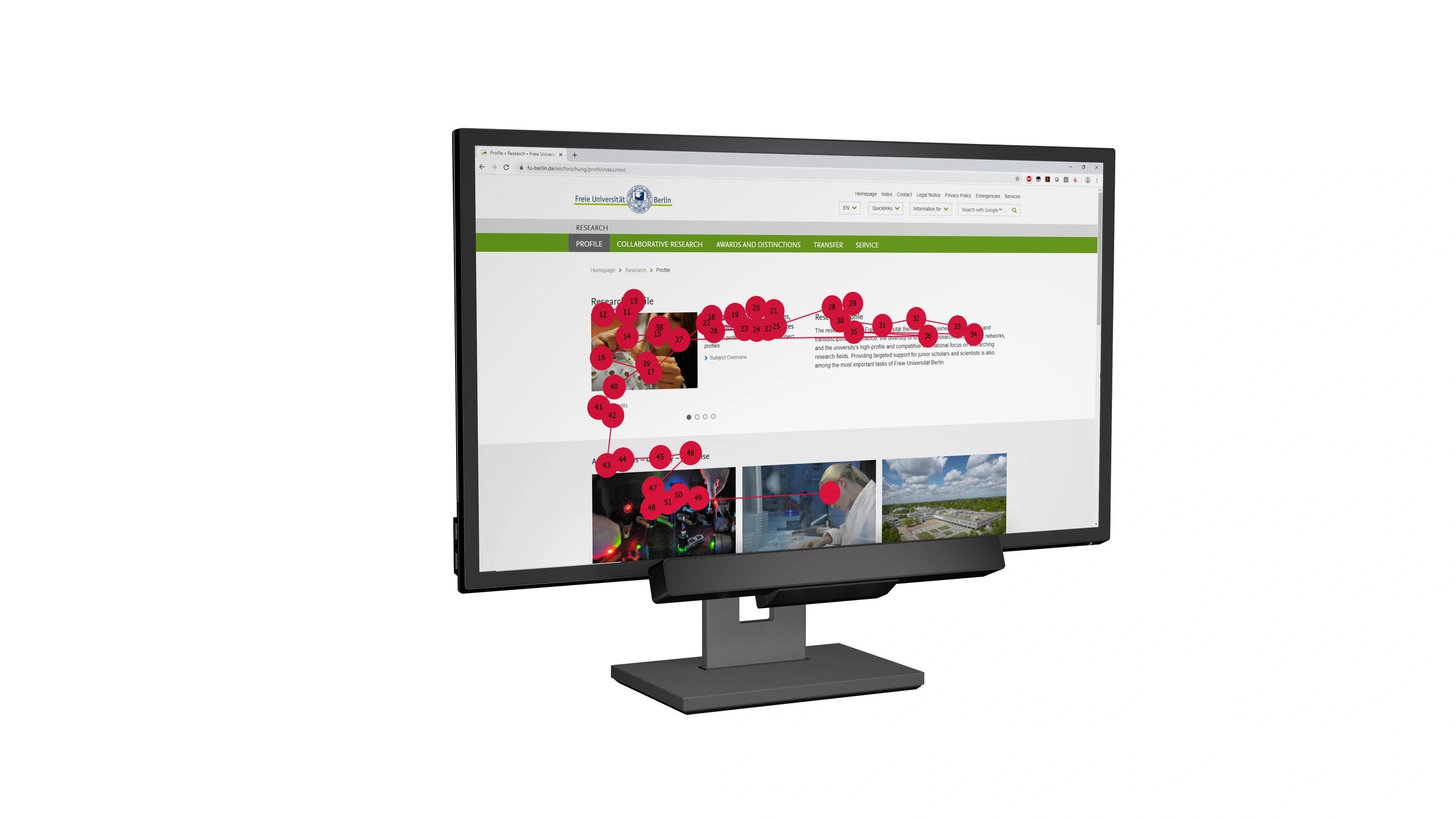
What does an eye tracking system measure?
Eye tracking records eye movements and estimates gaze direction. It enables study of fixations, saccades, scanpaths and, depending on the device, pupil size. Looking at an area does not imply understanding or preference: measurements gain meaning from the task and participant responses.
In the laboratory, gaze can be mapped to screen coordinates. In real-world settings, glasses combine gaze with scene video. These approaches have different movement, calibration and analysis requirements.
Equipment for each situation
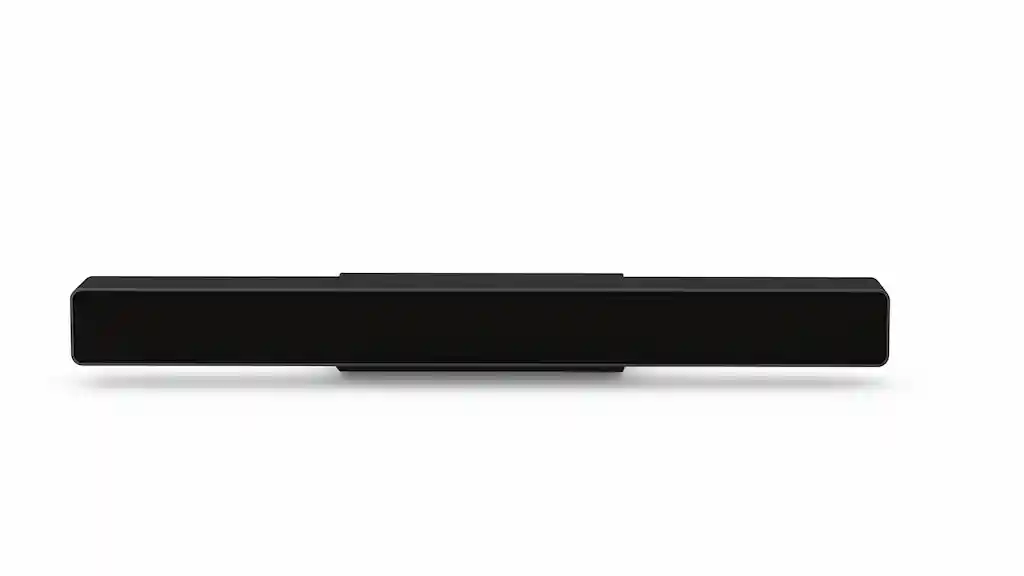 SCREEN-BASED · EYELOGIC
LogicOne 250 Hz
For screen-based psychology, reading and visual attention studies. The 250 Hz version provides one sample every 4 ms; this interval alone does not describe spatial gaze precision.
Ask Gaze Intelligence about EyeLogic →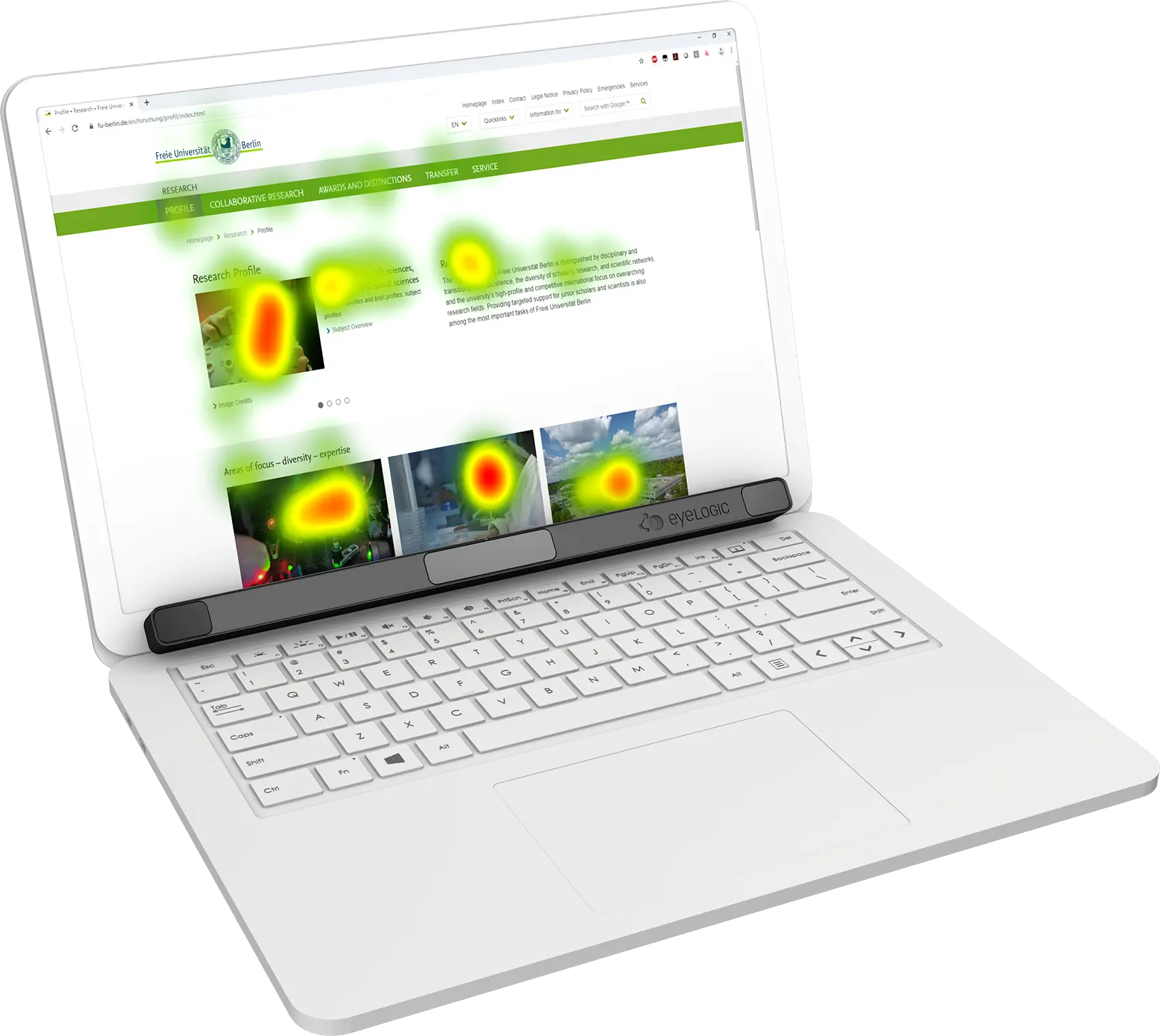 SCREEN-BASED · EYELOGIC
Lite 60 / 120 Hz
A portable format for screen-based studies. Version choice depends on protocol, timing needs and experiment software. A demonstration can verify tracking with your population.
Discuss a Lite configuration →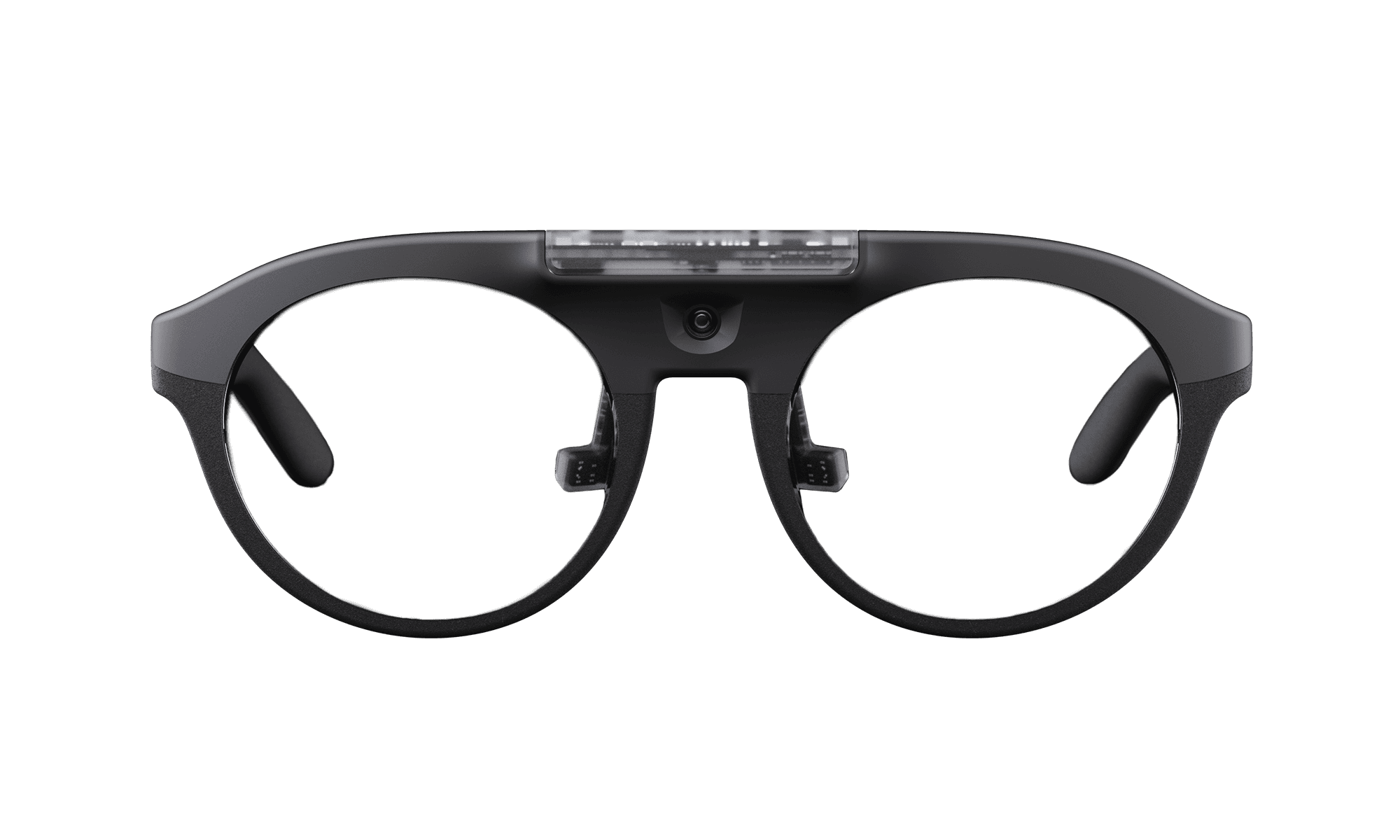 ON THE MOVE · PUPIL LABS
Neon glasses
Observe gaze during activities, interactions or movement. Plan video analysis, areas of interest and exports before starting the study.
Contact Gaze Intelligence about Neon →VR / XR AND MRIDedicated setups
A screen-based device is not automatically suitable for an immersive headset or MRI. We assess mounting, eye visibility and the required interfaces.
Explore MRI configurations →SMI TECHNICAL SUPPORT
Your SMI systems still have more to offer.
Our team worked at SMI (SensoMotoric Instruments) before its acquisition by Apple in 2017. Since then, we have helped many customers continue using their existing SMI systems.
We provide technical support for all SMI eye tracking systems: getting started, configuration, acquisition, analysis and data export.
Analysis and experiments
BeGaze · Experiment Center
Acquisition and hardware
SMI ETG · SMI iViewX · REDm · REDn
SMI software
Installation, reinstallation and download requests according to your version and licence.
Independent support from Gaze Intelligence. Include the model, software, version and issue so we can review your request.
Compare criteria relevant to your protocol
| Criterion | Question to ask |
|---|
| Sampling rate | Are you studying fixation duration, saccade dynamics or gaze-contingent control? |
|---|
| Precision and accuracy | What target size must you distinguish, and at what screen distance? |
|---|
| Population | Does tracking remain usable with glasses, head movement or specific populations? |
|---|
| Data | Can you access samples, validity indicators, events and analysis settings? |
|---|
| Synchronisation | How do you link gaze to stimuli, EEG or video with measured latency? |
|---|
From experiment to gaze analysis
Software is part of equipment selection. It must present stimuli, identify trials, verify calibration and export required data. We help define this workflow before choosing licences.
Blickshift Analytics and EventIDE feature in our historical offering. We check supported formats and versions with your equipment; brand-level compatibility does not guarantee every device or function.
For an existing SMI installation, describe devices, software and files to retain. The aim is continuity and export testing, without promising automatic migration of every old project.
Combine eye tracking and EEG
Eye tracking describes visual behaviour; EEG describes electrical activity recorded at the scalp. Together they support analyses aligned to eye events, requiring controlled synchronisation and ocular artefact processing. Read our eye tracking and EEG guide.
Sources and documentation
Technical documentation and further reading.
Your protocol before the specifications.
Specify population, stimuli, environment and equipment to synchronise.